
 EN
EN
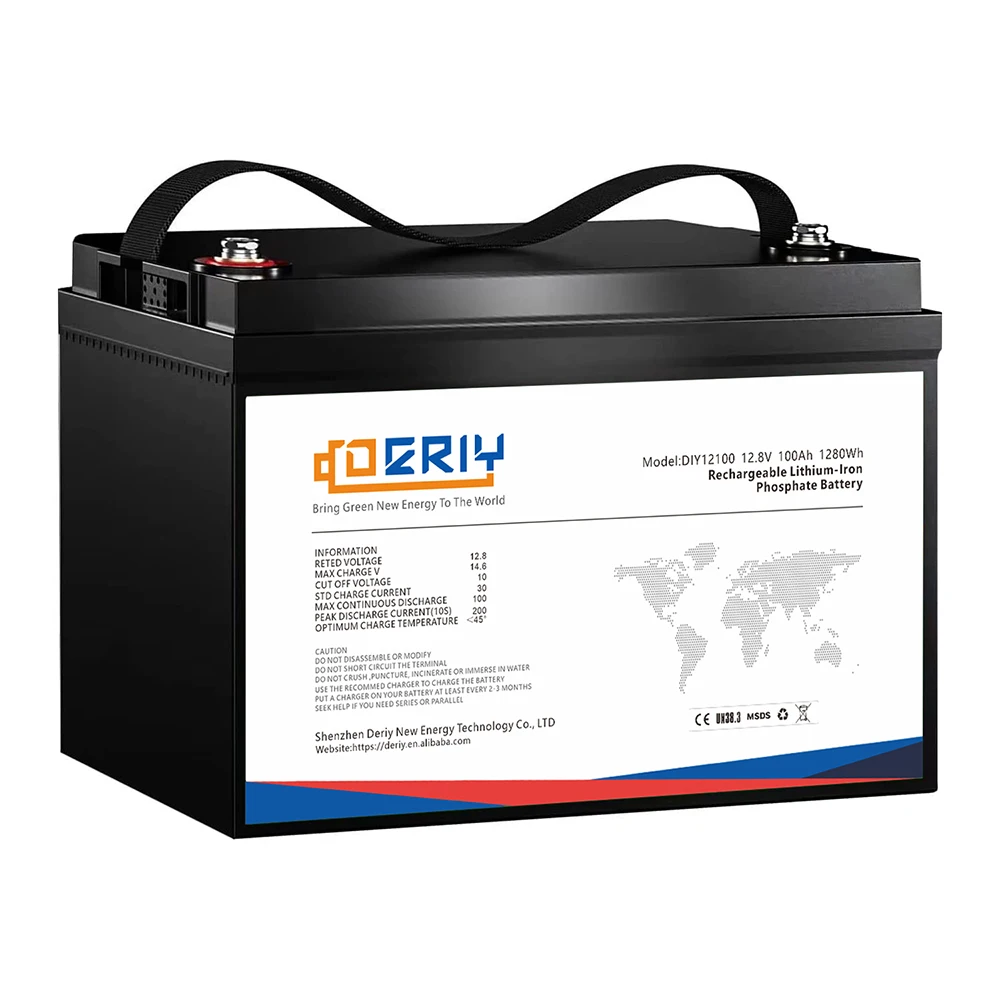
Sizing Small Battery Pack Capacity by Real Appliance Energy Demand
Why Ah Alone Misleads: Prioritizing Daily kWh and Peak kW Over Nominal Amp-Hours
Looking only at amp-hour (Ah) ratings gives an incomplete picture of what a small battery pack can actually do. The voltage level and how deep we discharge the battery (DoD) really change things when it comes to usable energy storage. Take this example: a standard 100Ah lead acid battery operating at 50% DoD produces around 0.6kWh of usable power (doing the math: 12 volts multiplied by 100 amps times 0.5 divided by 1000). Compare that to a lithium battery with the same Ah rating but capable of 90% DoD, which delivers about 1.08kWh (same calculation but with 0.9 instead of 0.5) – that's almost double the actual energy available! And here's another problem nobody talks about enough: Ah ratings completely ignore those sudden power spikes. Think about a fridge running normally at 300 watts but needing 900 watts when the compressor kicks in. Those short bursts of power demand are invisible to simple Ah measurements. Smart installers focus on two key metrics instead: daily kWh requirements for regular operation and peak kW capacity to handle those unexpected surges, especially important for appliances with motors or inverters starting up.
Load Profile Example: Refrigerator, LED Lighting, and Phone Charging on a 1.2kWh Small Battery Pack
A 1.2kWh lithium pack (90% DoD = 1.08kWh usable) efficiently supports:
- Refrigerator: 100W — 8h runtime = 0.8kWh daily, plus ~500W startup surge
- LED Lights: Three 10W bulbs — 5h = 0.15kWh
-
Phone Charger: 10W — 2h = 0.02kWh
Total daily draw: 0.97kWh leaves 0.11kWh buffer—sufficient for minor fluctuations but not surge headroom alone. To prevent voltage sag or shutdowns during startup, pair the pack with a 600W pure-sine-wave inverter rated for ≥2 — continuous output (i.e., 1.2kW surge capacity). This configuration validates why system sizing must center on kWh/kW—not Ah—to avoid operational failure.
Voltage Selection for Small Battery Pack Portability and Efficiency
Choosing the right voltage configuration directly impacts your system's portability, efficiency, and lifespan. For off-grid small battery packs, voltage isn’t just about compatibility—it governs real-world performance across three dimensions: wiring losses, inverter synergies, and battery longevity.
12V vs. 24V vs. 48V: Tradeoffs in Wiring Loss, Inverter Compatibility, and Cycle Life for Small Battery Pack Use
Higher voltages minimize energy waste and improve scalability:
- Wiring Loss: Power loss scales with current squared (P = I²R). At identical power, 48V draws one-quarter the current of 12V—reducing resistive losses by up to 75% and enabling thinner, lighter cabling.
- Inverter Costs & Efficiency: 48V systems work optimally with high-frequency, lightweight inverters; 12V often requires bulkier, lower-efficiency low-frequency models.
- Cycle Life: Stable voltage operation reduces stress on cells. Independent testing shows 24V and 48V lithium systems sustain ~15% more cycles than equivalent 12V setups under matched load profiles, due to reduced per-cell voltage swing and fewer deep discharges per cycle.
Portability Tip: 12V remains ideal for ultralight, sub-1kWh applications where simplicity and component availability outweigh efficiency gains—but 24V offers the strongest balance of weight savings, wiring simplicity, and inverter compatibility for most portable off-grid use cases.
Industry Insight: 48V lithium packs store identical energy using half the number of 3.2V cells required in a 12V configuration—directly cutting weight, volume, and BMS complexity—making them the de facto standard for mobile and modular off-grid systems [BatteryTech 2023].
Ensuring Small Battery Pack Compatibility with Off-Grid Appliances and Power Electronics
Matching Surge Signatures: Why Micro-Inverters and DC-DC Controllers Matter for Sub-500W Small Battery Pack Systems
Refrigerators, water pumps and other off grid appliances create massive startup surges when they turn on suddenly. These spikes can reach five times what the appliance normally draws while running, which tends to wreak havoc on smaller battery packs below 500 watts capacity. That's where micro inverters come into play. They handle those power spikes by transforming direct current into cleaner alternating current with quick response time regulation. This helps keep things stable when compressors kick in and start drawing extra juice. At the same time, DC to DC controllers work hard to deliver just the right amount of voltage needed for things like LED lights or charging phones via USB ports. No more wasted energy because of voltage mismatches between sources and what devices actually need. Putting all this together cuts down overall energy waste somewhere around 15-20%, plus reduces stress on individual battery cells so they last longer before needing replacement. When dealing with systems under 500 watts, getting the right size micro inverters and DC controllers installed properly isn't something to skip over if someone wants reliable power supply out there in remote locations.
FAQs About Small Battery Pack Systems
Why are Ah ratings not sufficient for measuring battery pack capacity?
Amp-hour (Ah) ratings do not account for voltage levels, depth of discharge (DoD), and power spikes, all of which are crucial for understanding actual energy storage capability and performance during sudden power surges.
How does choosing the right voltage configuration affect battery pack performance?
The voltage configuration impacts efficiency, portability, and system lifespan by influencing wiring losses, inverter compatibility, and battery cycle life.
What role do micro-inverters and DC-DC controllers play in small battery systems?
Micro-inverters regulate startup power surges, ensuring stability, while DC controllers match voltage requirements to prevent wasted energy and prolong battery life.